
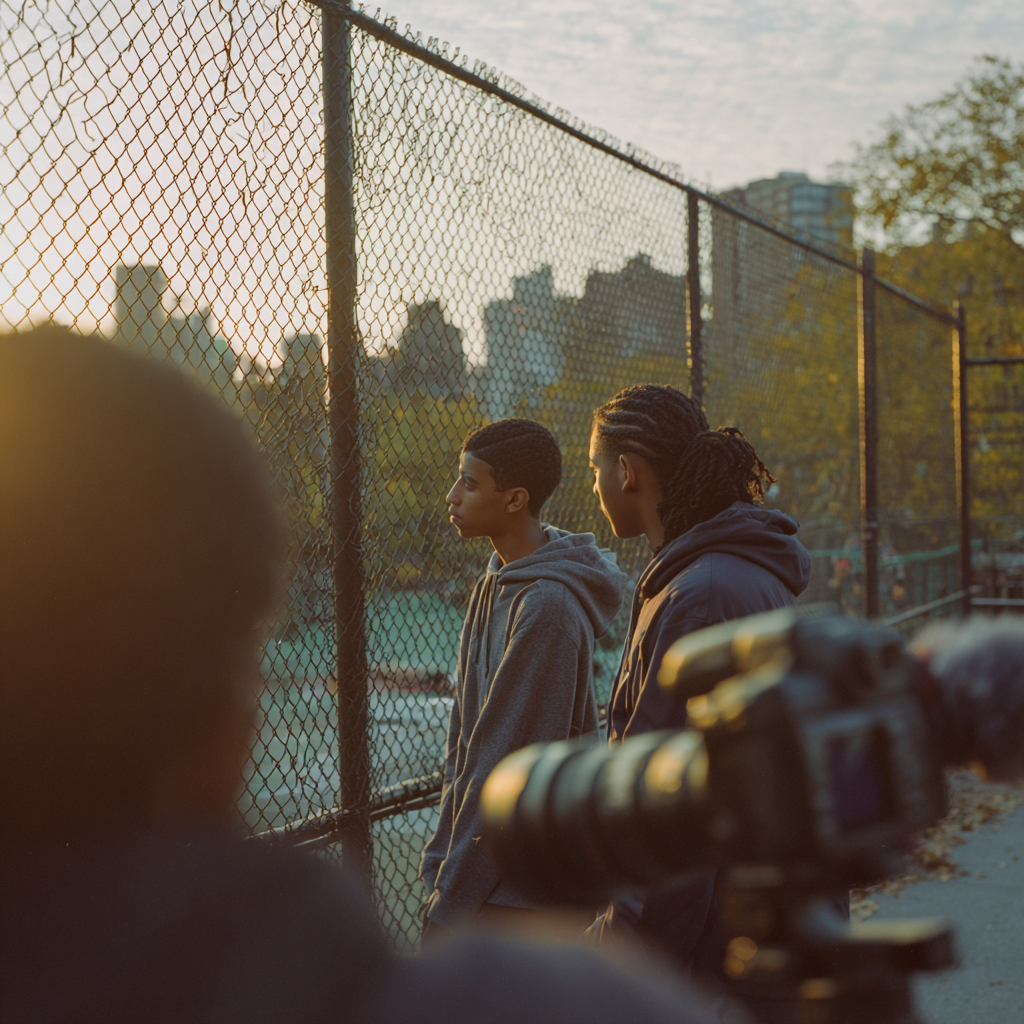
CITY STORIES
Documentary + Community Storytelling
Students learn to tell the stories happening around them.
City Stories is a six-week, project-based documentary Lab where students work together to research, interview, film, and edit short documentaries about inspiring people in their communities. Through the process, students explore journalism, filmmaking, research, storytelling, and ethical representation while learning how creative work can preserve and amplify the stories around them.
WHAT STUDENTS DO
Students work as a documentary production team, rotating through the roles and responsibilities behind a real nonfiction film:
Discover — Identify local people and stories worth documenting.
Research — Investigate their subjects and develop thoughtful interview questions.
Interview — Learn how to listen, ask questions, and conduct on-camera interviews.
Produce — Operate cameras, record sound, and capture the people and places that bring the story to life.
Edit — Shape interviews and footage into a clear, compelling narrative.
Share — Screen their work and discuss the stories they chose to tell.
WHAT THEY MAKE
Each production team creates:
A finished 2-minute micro-documentary
A vertical social cut
A documentary poster
A public screening + panel discussion
WHAT THEY LEARN
City Stories brings together creative production with academic, interpersonal, and professional skills:
Documentary Storytelling + Production
Interviewing, cinematography, sound recording, visual storytelling, editing, and narrative structure.
Research + Writing
Source validation, interview-question development, expository writing, script drafting, and organizing information into a meaningful narrative.
Listening + Communication
Students learn to engage thoughtfully with another person's experience, communicate clearly, and present their work publicly.
Collaboration + Responsibility
Rotating production roles require students to depend on one another, take ownership of their work, and respect the people and communities whose stories they are telling.
CAREER PATHWAYS
City Stories introduces students to the collaborative roles behind documentary filmmaking, journalism, and nonfiction media, including:
Director • Producer / Researcher • Interviewer • Cinematographer • Editor • Sound Recordist
PROFESSIONAL MENTORSHIP
Documentary professionals join students at key points in the process. During pre-production, mentors help students think about truth, perspective, ethics, and responsibility when representing real people. Later, professional editors can review rough cuts and provide feedback on narrative structure, emotional arc, pacing, tone, and clarity—introducing students to the critique and revision process of professional documentary work.
THE EXPERIENCE
WEEK 1 — DISCOVER + RESEARCH
Find compelling local stories, research subjects, develop interview questions, and assign production roles.
WEEK 2 — PREPARE
Learn camera and sound fundamentals, practice interviews, and build the production plan.
WEEK 3 — DOCUMENT
Conduct interviews and capture the people, places, and details that make the story real.
WEEK 4 — BUILD THE STORY
Complete production and begin shaping footage through editing.
WEEK 5 — REFINE
Develop the documentary through editing, feedback, and revision.
WEEK 6 — SHARE
Complete the films and present them through a public screening and discussion.